
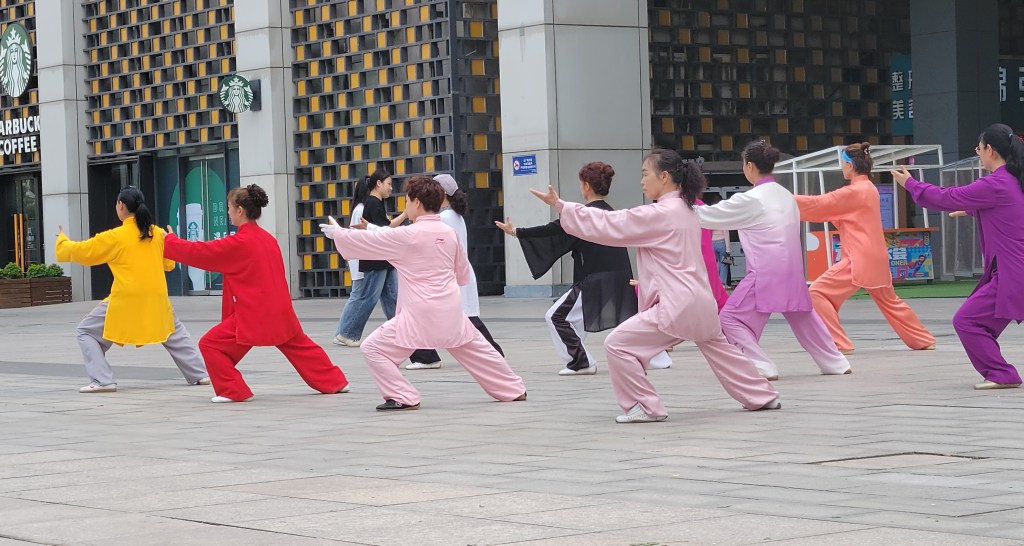
Recently, I came across a video on YouTube where the instructor mentioned that the Yang-style long form is very difficult to learn. This view surprised me because, historically, the long form was the cornerstone of Tai Chi instruction. From its development in the mid-1800s until the introduction of shorter forms in the 1950s, it was the only form taught. In my experience, anyone with consistent practice and a well-structured teaching approach can master the long form. Challenges often arise when instructors fail to present the material in an accessible way, or when students don’t dedicate enough time to practice between lessons. More often, it’s a combination of both factors that hinders progress.
The Yang-style long form is like a book where each movement tells an essential part of the story. The three sections of the form are like chapters, with each section building on the last to create a complete and cohesive narrative. While shorter forms can be viewed as abridged versions that give practitioners an overview, they inevitably leave out key elements. These missing movements often contain subtleties that provide deeper insights into the form’s martial applications, energy cultivation, and internal principles.
By practicing the full long form, you gain a more comprehensive understanding of Tai Chi. Each movement, transition, and sequence contributes to mastering body mechanics, breath coordination, and the integration of mind and intent. The long form promotes patience and mindfulness, allowing for greater refinement of postures and alignment.
Although shorter forms offer convenience and accessibility, they cannot replace the depth and richness of the traditional long form. Just as abridging a book removes key plot points and nuances, shortening the Tai Chi form omits essential aspects necessary for truly mastering the art.
Article updated 12/3/24


 Redding Tai Chi
Leave a reply to Dennis Cancel reply