
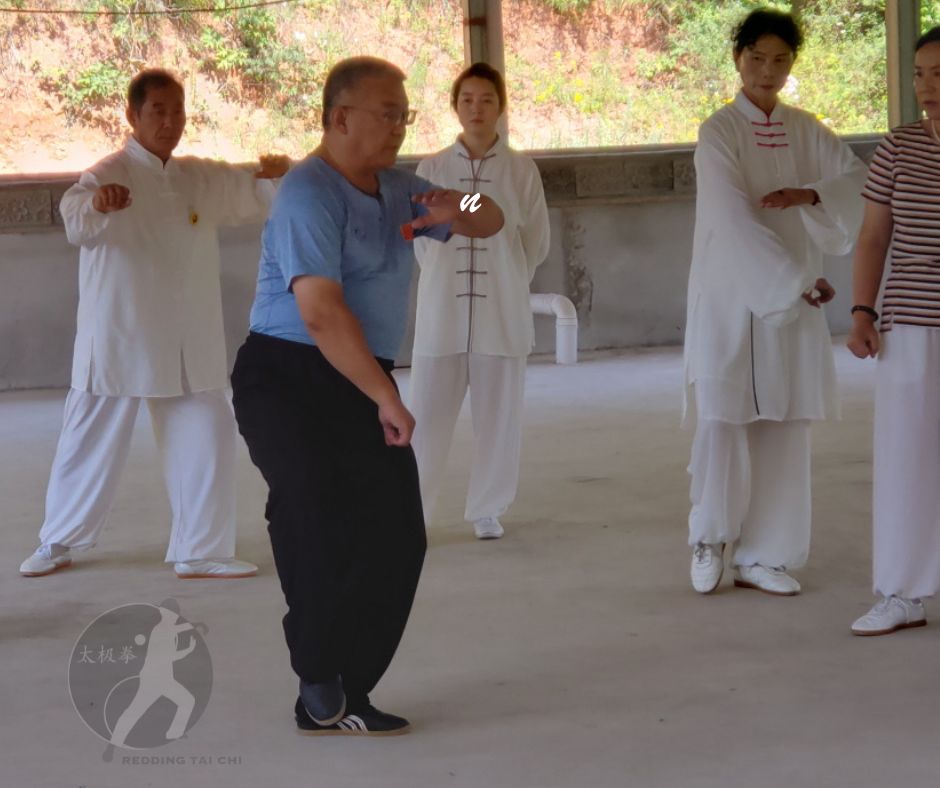
The concept of “stepping like a cat” originates from Expositions of Insights into the Practice of the Thirteen Postures, by Wu Yuxiang (1812–1880), a text considered one of the Tai Chi classics. This idea is based on observing how a cat moves, particularly when stalking prey. If you’ve seen a cat stalking, you know it takes slow, deliberate steps, carefully placing each paw as it draws closer.
In Tai Chi, we also aim to move in this slow and focused way, especially with our footwork. Embracing this “cat step” concept can help deepen your Tai Chi practice. Here’s a simple exercise to try:
1. Start with Your Stance
Stand with feet shoulder-width apart, sinking your weight entirely onto the right leg to find your balance. For added stability, extend your arms to the sides if needed, ensuring all weight is centered on the right leg before you proceed.
2. Step Slowly and Mindfully
Without rising, lift your left foot and step out diagonally in front of you. Gently place the heel down first, then, only after your heel touches the ground, gradually shift your weight forward, sinking fully onto the left leg. Once all weight is transferred to the left leg, draw your right foot inward to regain balance and prepare for the next step. Repeat this slow, deliberate movement with the other foot.
3. Continue with Intention
Each step should follow a careful rhythm: center, step, and sink forward. Keep taking these mindful steps in a slow, steady sequence.
Though this exercise may seem simple, it presents unexpected challenges. When introduced to beginners or in workshops, it often starts as a fun activity. But people quickly realize that moving slowly with control requires much more focus and effort than anticipated. We’re so accustomed to moving quickly that slowing down can feel like a challenge all its own.
Why Practice “Cat Steps”?
This exercise, while not directly part of the Tai Chi form, aligns with fundamental Tai Chi principles since nearly every Tai Chi movement involves stepping. Practicing in this way helps build balance and concentration, two essential Tai Chi skills. Consciously shifting your weight from one side to the other not only improves balance but also promotes the mindful awareness that Tai Chi encourages.
As you practice, remember: sink, step out, then shift your weight forward. After shifting, draw your leg in and repeat. Even in this seemingly simple movement, you’ll find yourself shifting weight multiple times—left, right, forward, and back. These micro-shifts gradually build better balance and body awareness over time.
Practice Tips
In Tai Chi, a common error is shifting your weight too early while stepping, instead of first placing the foot down and then transferring weight onto it. This exercise reinforces proper foot placement and weight transfer, allowing for smooth, flowing transitions between movements. Take your time with each step—slower and softer is better. Practicing this way builds steadiness and fluidity.
Stepping Backward: A Further Challenge
You can adapt this exercise by stepping backward, as in the Tai Chi movement Step Back Like a Monkey (also called Step Back and Repulse Monkey). When stepping backward, lead with the toes. Walking backward activates different muscles and further challenges balance, enhancing body awareness, which is essential for overall stability.
Many people think that balance exercises must be complex, like balancing on one leg or walking on a beam. Tai Chi teaches that balance can improve through subtle movements. By simply being aware of your steps and weight shifts, you may notice significant progress within weeks. Whether you are a beginner or a long-time practitioner, this exercise can improve your stepping skill, and all it takes is a few minutes of practice a day.
 Redding Tai Chi
Leave a comment